

Nature kit

This project explores my design process from initial research to final product development. The goal was to create an interactive learning tool that encourages children to explore nature through hands-on discovery.
Starting from user insights and problem definition, I developed multiple concepts and interaction ideas, gradually refining them through sketching, prototyping, and technical testing. The final outcome is Nature Kit, a playful exploration device designed to support curiosity, learning, and real-world engagement.
Problem & Opportunity
Children aged 3–6 are naturally curious and eager to explore their environment. However, modern learning tools often rely heavily on digital screens, which can reduce physical interaction with the real world
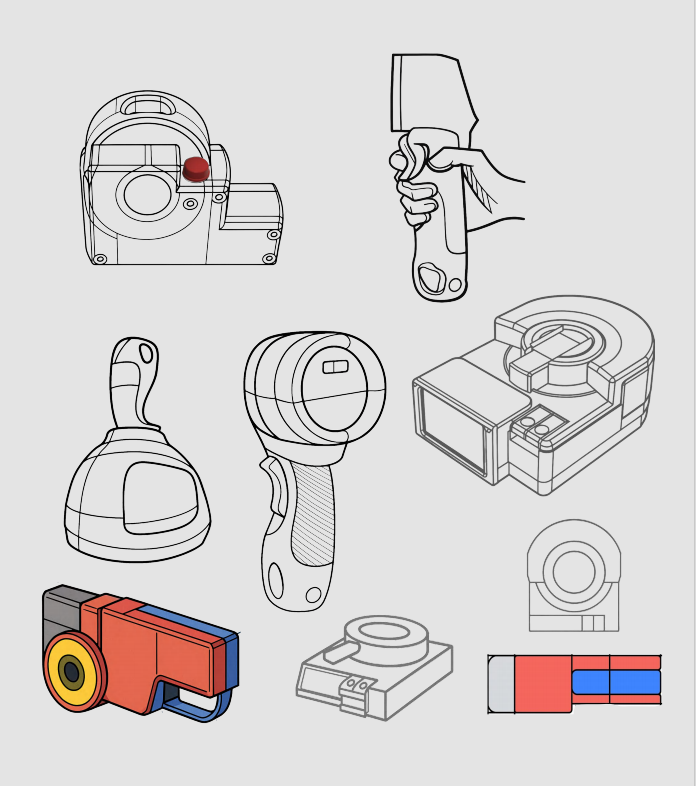
How might we create a playful learning tool that encourages children to explore nature through real-world discovery?
User Insights
Feedback from parents and children aged 3–6 revealed that:
1. Children prefer physical interaction over screen-based interfaces
2. Simple and intuitive controls are critical
3. Multi-sensory feedback increases engagement
Interaction Design
To protect children’s eyesight, the system abandons traditional screen-based interaction and adopts a fully physical interaction logic. The entire product is controlled through tangible actions such as inserting, rotating, and pressing buttons.


The system combines:
tactile feedback (vibration),visual feedback (display),auditory feedback (speaker),motion-based interaction (rotation)
Prototype
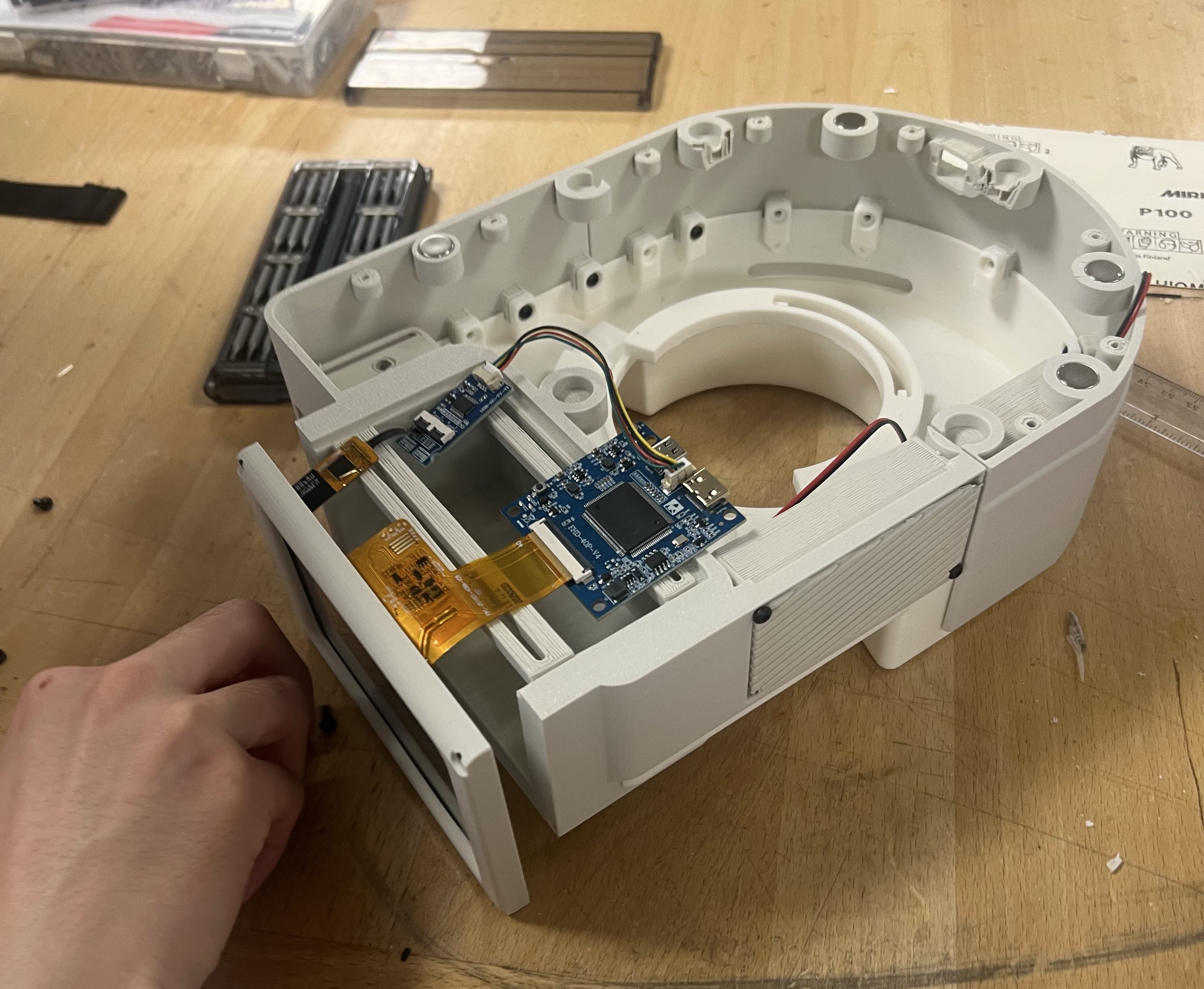
Multiple rounds of prototyping were conducted to validate the interaction logic and product.Each iteration of 3D printing, assembly, and testing was conducted to evaluate whether children could engage with the product in a more natural and intuitive way.
Lo-Fi Prototyping
Low-fidelity models were used to explore different arrangements of: buttons, rotation mechanisms. screen placement

Hi-Fi Prototyping: After defining the interaction logic, higher-fidelity prototypes were built to test the functional components and structural design. This stage focused on integrating elements. Through physical testing, issues such as friction between moving parts were identified and improved by adjusting structural tolerances



User guide & Package design
Key user guide features include:
Simple action-based instructions: Clear verbs such as Press, Insert, and Rotate help children quickly understand how to interact with the product.
Visual-first communication: Illustrated instructions reduce reliance on text, making the guide easy for young users to follow.
Parent-assisted learning tips: Guidance for parents encourages shared exploration and supports deeper learning experiences.


Key package features include:
Book-Style Magnetic Flap Box: Inspired by the My First Sony product line, the packaging opens like a book, enhancing the sense of discovery.
Window Display: A die-cut window allows the product to be partially visible, attracting attention on retail shelves
Sustainable Materials: The packaging uses recyclable cardboard materials in compliance with the EU Packaging Directive (94/62/EC).

More
.png)


